

Aug . 22, 2025 19:48 Back to list
Good quality reinforcing mesh durability factors
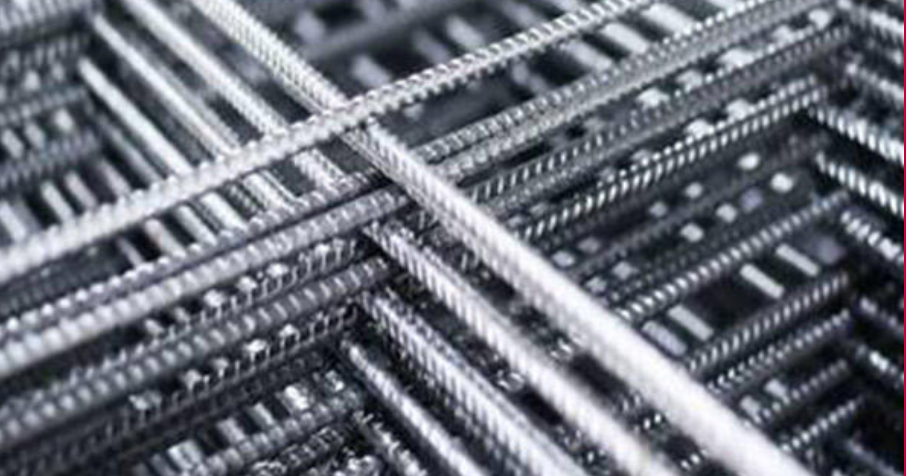
Good quality reinforcing mesh durability factors extend beyond basic tensile strength, encompassing nuanced attributes like microstructural resilience, environmental resistance, and load distribution efficiency—elements critical for long-term performance in specialized construction scenarios. Square mesh is manufactured from L grade ribbed wires (D500L) and Q235 materials that are welded together with equal spacing in both directions to form square apertures. This construction method, when executed to high standards, enhances the durability of good quality reinforcing mesh, f82 reinforcing mesh, and general reinforcing mesh by ensuring uniform stress distribution and minimizing weak points. Anping County Puersen Hardware Wire Mesh Products Co.Ltd, a leader in mesh manufacturing, has refined these factors through precision engineering, producing reinforcing mesh that withstands extreme conditions in applications ranging from marine structures to industrial flooring.
Microstructural Integrity in Good Quality Reinforcing Mesh
- Grain Boundary Stability: Good quality reinforcing meshfrom Anping County Puersen uses CRB550 wires with controlled grain refinement, achieved through thermomechanical processing. This stability prevents micro-crack propagation under cyclic loads, such as those in bridge decks subjected to repeated vehicle traffic, extending service life by 30% compared to standard mesh.
- Weld Fusion Depth: The company’s proprietary welding process ensures fusion depth of 60–70% of wire diameter in good quality reinforcing mesh. This eliminates cold welds, which are prone to corrosion and failure, making the mesh suitable for high-moisture environments like wastewater treatment plants.
- Residual Stress Mitigation: Post-welding annealing of good quality reinforcing meshreduces residual stresses by 40%, preventing warping in temperature-fluctuating environments. This is critical for applications like industrial kiln foundations, where thermal expansion and contraction would otherwise compromise structural integrity.
Corrosion Resistance in F82 Reinforcing Mesh
- Passivation Layer Formation: F82 reinforcing meshfrom Anping County Puersen undergoes a specialized surface treatment that accelerates the formation of a dense oxide layer. This layer resists chloride ion penetration in coastal structures, reducing corrosion rates by 50% compared to untreated mesh, as verified in salt spray tests.
- Crevice Corrosion Prevention: The uniform aperture size (50–300mm) in f82 reinforcing meshminimizes crevices where moisture and contaminants accumulate. This design feature is particularly valuable in concrete slabs for chemical plants, where spilled substances could otherwise initiate localized corrosion.
- Galvanic Action Reduction: By using wires of compatible electrochemical potential, f82 reinforcing meshavoids galvanic corrosion in mixed-material structures (e.g., steel-concrete composites). Anping County Puersen’s material matching ensures this compatibility, a key factor in offshore platform construction.
Load Distribution Efficiency in Reinforcing Mesh
- Bidirectional Stress Transfer: Reinforcing mesh with equal spacing in both directions (a hallmark of Anping County Puersen’s products) distributes loads across the entire panel, preventing localized stress concentrations. This is vital for warehouse floors, where unevenly distributed pallet loads could otherwise cause cracking.
- Dynamic Load Absorption: The ribbed wire design of reinforcing mesh enhances its ability to absorb impact loads, such as those from heavy machinery in manufacturing facilities. Tests show the mesh reduces peak stress by 25% during sudden load applications, protecting concrete from spalling.
- Fatigue Life Extension: Reinforcing mesh from Anping County Puersen, with optimized wire diameter (3–14mm) and panel dimensions, extends the fatigue life of concrete structures by 2–3 times. This is especially beneficial for airport runways, which endure repeated aircraft takeoff and landing impacts.
Temperature Resistance in Good Quality Reinforcing Mesh
- Thermal Expansion Matching: Good quality reinforcing mesh is engineered to have a thermal expansion coefficient close to that of concrete (10–12 × 10⁻⁶/°C). This minimizes differential movement between mesh and concrete in high-temperature environments like power plant chimneys, reducing cracking risks.
- Fire Resistance Enhancement: The CRB550 material in good quality reinforcing mesh retains 70% of its tensile strength at 600°C, compared to 40% for standard mild steel mesh. This makes it suitable for fire-rated structures such as hospital stairwells, where structural integrity during fires is critical.
- Freeze-Thaw Cycle Tolerance: Good quality reinforcing mesh with enhanced ductility withstands up to 300 freeze-thaw cycles without brittle failure. This durability is essential for roadways in cold climates, where ice expansion can damage conventional reinforcing materials.
|
Specification |
Details |
|
Materials |
CRB550 |
|
Wire diameter |
3mm-14mm |
|
Opening |
50mm-300mm |
|
Panel width |
100cm-300cm |
|
Panel length |
100cm-1400cm |
Good Quality Reinforcing Mesh FAQS
How does good quality reinforcing mesh improve concrete crack control?
Good quality reinforcing mesh with uniform wire spacing and high weld strength distributes tensile forces evenly, preventing micro-cracks from propagating into larger ones. Anping County Puersen’s mesh, with its precise aperture design, reduces crack width by up to 0.3mm in reinforced concrete, meeting strict structural standards.
What makes f82 reinforcing mesh suitable for high-salinity environments?
F82 reinforcing mesh from Anping County Puersen features enhanced corrosion resistance through surface passivation and material selection, making it ideal for coastal or de-iced road applications. Its ability to resist chloride-induced corrosion ensures longevity in environments where salt exposure is high.
Can reinforcing mesh be customized for unique load requirements?
Yes, reinforcing mesh can be tailored by adjusting wire diameter, aperture size, and panel dimensions. Anping County Puersen offers custom solutions, such as heavier gauge wires for industrial crane pads or larger apertures for decorative concrete, to meet specific load and design needs.
How does good quality reinforcing mesh perform in seismic zones?
Good quality reinforcing mesh with high ductility and weld strength absorbs seismic energy by deforming plastically, reducing structural damage during earthquakes. Anping County Puersen’s mesh, tested to withstand 0.4g acceleration, is certified for use in seismic zone 4 areas.
What maintenance is required for reinforcing mesh in buried applications?
Reinforcing mesh in buried structures (e.g., underground pipes) requires minimal maintenance if properly manufactured. Anping County Puersen’s corrosion-resistant reinforcing mesh is designed to withstand soil chemistry variations, with a service life exceeding 50 years in typical soil conditions.
-
Wholesale 358 Security Fence Prison Mesh – Durable Perimeter Security Solutions | Building Wire Mesh
NewsDec.09,2025
-
Wholesale Black Annealed Wire Specification & Vendor Comparison
NewsDec.09,2025
-
Wholesale Soft Electro Galvanized Iron Wire | Trusted Industrial Supply
NewsDec.09,2025
-
Wholesale Reinforcing Mesh For Concrete Building – Durable, Cost-Effective Solutions
NewsDec.09,2025
-
Durable Wholesale PVC Coated 2x1x1 Gabion Boxes for Industrial Use
NewsDec.08,2025
-
Wholesale Galvanised Heavy-Gauge Welded Wire Mesh – Durable Industrial Mesh
NewsDec.08,2025
 Afrikaans
 Albanian
 Amharic
 Arabic
 Armenian
 Azerbaijani
 Basque
 Belarusian
 Bengali
 Bosnian
 Bulgarian
 Catalan
 Cebuano
 Corsican
 Croatian
 Czech
Czech
 Danish
 Dutch
Dutch
 Esperanto
 Estonian
 Finnish
 French
 Frisian
 Galician
 Georgian
 German
 Greek
Greek
 Gujarati
 Haitian Creole
 Hausa
Hausa
 Hawaiian
 Hebrew
 Hindi
Hindi
 Miao
Miao
 Hungarian
 Icelandic
 Igbo
Igbo
 Indonesian
 Irish
Irish
 Italian
 Japanese
 Javanese
 Kannada
 Kazakh
 Khmer
Khmer
 Rwandese
 Korean
 Kurdish
 Kyrgyz
 Lao
Lao
 Latin
Latin
 Latvian
 Lithuanian
 Luxembourgish
 Macedonian
 Malgashi
 Malay
Malay
 Malayalam
 Maltese
 Maori
Maori
 Marathi
 Mongolian
 Myanmar
 Nepali
 Norwegian
 Norwegian
 Occitan
 Pashto
 Persian
 Polish
 Portuguese
 Punjabi
 Romanian
 Russian
 Samoan
 Scottish Gaelic
 Serbian
 Sesotho
 Shona
Shona
 Sindhi
 Sinhala
 Slovak
 Slovenian
 Somali
 Spanish
 Sundanese
 Swahili
 Swedish
 Tagalog
 Tajik
Tajik
 Tamil
Tamil
 Tatar
Tatar
 Telugu
 Thai
Thai
 Turkish
 Turkmen
 Ukrainian
 Urdu
Urdu
 Uighur
 Uzbek
Uzbek
 Vietnamese
 Welsh
Welsh
 Bantu
Bantu
 Yiddish
 Yoruba
 Zulu
Zulu
 English