

Oct . 01, 2025 11:00 Back to list
Need Welded Wire Mesh for Industry Factory: Durable, Custom?
BS Reinforcing Mesh: the quiet workhorse in factory-grade concrete
If you’re hunting for welded wire mesh for industry factory floors, plinths, and machine foundations, the conversation inevitably swings to BS Reinforcing Mesh. It’s not flashy. But it’s the grid that keeps slabs together when forklifts dart and production lines thrum for double shifts. I’ve walked enough plants to see the difference: well-chosen mesh equals fewer repairs and calmer maintenance teams.
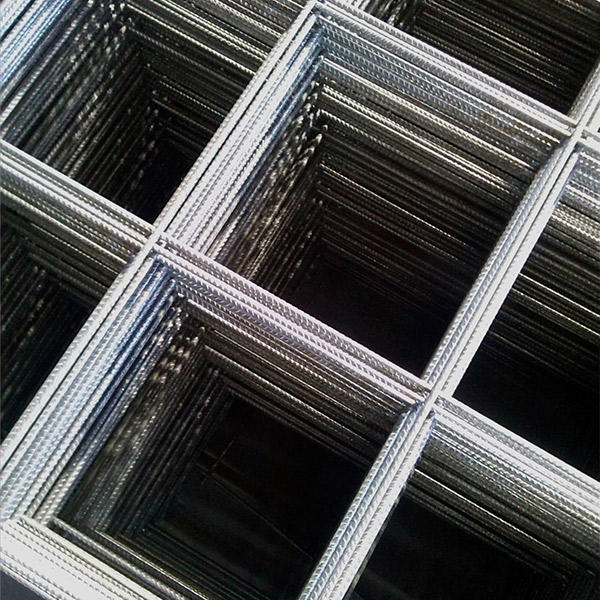
What it is, and why factories care
BS Reinforcing Mesh—also called re-mesh or steel fabric—binds concrete, controls cracking, and bumps up load capacity. In factories, it sits under polished concrete or epoxy toppings, taking the hit from hard-wheeled traffic and point loads from racking. Many customers say they spec it once and never look back; surprisingly, the biggest gains often show up in reduced slab curling and better joint performance.
How it’s made (quick process flow)
- Materials: Cold-drawn low carbon steel wire per BS 4482 or high-ductility wire; optional hot-dip galvanized for corrosive zones.
- Methods: Resistance-welded cross wires on automated lines; de-coiling → straightening → pitch setting → welding → sheet cutting → tagging.
- Testing standards: Tensile/bend to BS 4449/BS 4483; weld shear and spacing checks; sampling to ISO 15630-1. Real-world use may vary, but QA logs matter.
- Service life: ≈ 50–100 years with proper cover, mix design, and curing; aggressive environments need coatings and tighter QA.
- Industries: Logistics hubs, FMCG plants, cold stores, automotive, precast yards, and food processing (with hygiene-focused toppings).
Typical specifications
| Parameter | Typical options (≈, real-world may vary) |
|---|---|
| Wire diameter | 4–12 mm (common: 6, 8, 10 mm) |
| Mesh aperture | 100×100 mm, 200×200 mm; custom spacing on request |
| Sheet size | 2.4×4.8 m (standard), custom cut sheets available |
| Steel grade | B500A/B per BS 4449; fyk ≈ 500 MPa |
| Coating | Black (as-welded) or hot-dip galvanized |
| Standards | BS 4483, BS 4449; test methods ISO 15630-1; comparable to ASTM A1064 |
Origin matters too: produced in Cuianpu Development Zone Southwest 800 meters, Anping County, Hebei 053600, China—an area that’s basically a hub for wire products. The cluster effect (I guess economists would nod) means mature tooling and fast turnaround.
Applications in factories
- Heavy-duty slabs for forklifts and AGVs
- Machine foundations and press lines
- Jointed/continuous slabs with steel fibers (hybrid reinforcement)
- Precast trench covers and utility pits
Vendor snapshot (what you actually compare)
| Vendor | Compliance | Lead time | QC docs | Notes |
|---|---|---|---|---|
| BS Reinforcing Mesh (Anping) | BS 4483/4449; ISO 9001 | 7–12 days typical | Mill certs + weld shear | Competitive MOQ; custom cut sheets |
| Local fabricator | Varies; often ASTM A1064 | 2–4 weeks | COC; occasional tensile | Fast site visits; higher unit cost |
| Generic importer | Mixed; check markings | 4–6 weeks | Limited | Price-led; verify weld spacing |
Real-world data, briefly
Recent QA batch (sample): fyk avg ≈ 545 MPa (min 500); elongation ≥ 5%; weld shear ≥ 1.2 kN per node at 8 mm wires; spacing deviation within ±3 mm. A site engineer told me—somewhat relieved—that crack widths stayed under 0.25 mm at forklift aisles after switching to tighter 150×150 mesh.
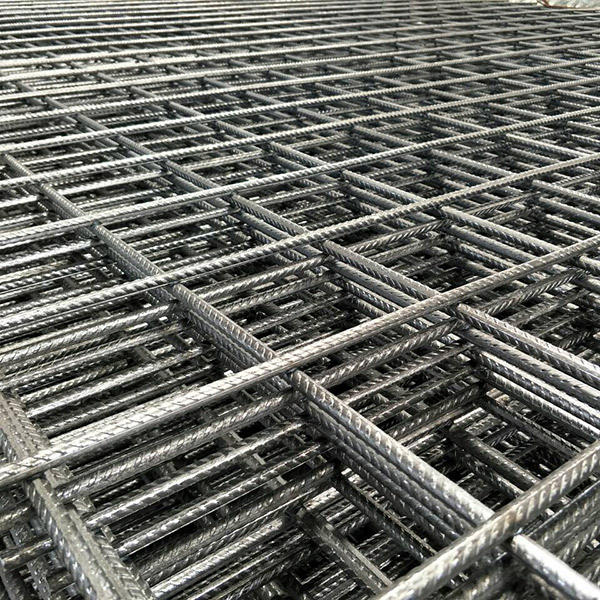
Customization and logistics
- Cut-to-size sheets reduce on-site overlap waste and speed pours.
- Galvanized option for washdown areas or coastal sites.
- Palletized bundles with color tags by zone; CE or ISO docs attached.
To be honest, spec decisions are often about context: joint layout, slab thickness, subbase stiffness, and shrinkage control. Still, for welded wire mesh for industry factory floors, BS-grade consistency is the safest baseline. And for retrofits with heavy racking, welded wire mesh for industry factory upgrades can be that subtle fix that saves weekends.
Case note
A beverage plant upgraded 6,000 m² of slab using 8 mm, 150×150 mm mesh. Pour cycles dropped by ≈ 12% thanks to pre-cut sheets; post-28-day cores showed compressive ≥ 38 MPa and crack widths controlled below 0.3 mm at joints. Small change, big calm in operations.
Certifications: ISO 9001 factory QC, material heats traceable; compliance to BS 4483/BS 4449; test methods per ISO 15630-1. Comparable performance available for ASTM A1064 projects.
Authoritative references
- BS 4483: Steel fabric for the reinforcement of concrete.
- BS 4449: Steel for the reinforcement of concrete — Weldable reinforcing steel.
- ISO 15630-1: Steel for the reinforcement and prestressing of concrete — Test methods.
- ASTM A1064/A1064M: Standard Specification for Carbon-Steel Wire and Welded Wire Reinforcement.
-
Wholesale 358 Security Fence Prison Mesh – Durable Perimeter Security Solutions | Building Wire Mesh
NewsDec.09,2025
-
Wholesale Black Annealed Wire Specification & Vendor Comparison
NewsDec.09,2025
-
Wholesale Soft Electro Galvanized Iron Wire | Trusted Industrial Supply
NewsDec.09,2025
-
Wholesale Reinforcing Mesh For Concrete Building – Durable, Cost-Effective Solutions
NewsDec.09,2025
-
Durable Wholesale PVC Coated 2x1x1 Gabion Boxes for Industrial Use
NewsDec.08,2025
-
Wholesale Galvanised Heavy-Gauge Welded Wire Mesh – Durable Industrial Mesh
NewsDec.08,2025
 Afrikaans
 Albanian
 Amharic
 Arabic
 Armenian
 Azerbaijani
 Basque
 Belarusian
 Bengali
 Bosnian
 Bulgarian
 Catalan
 Cebuano
 Corsican
 Croatian
 Czech
Czech
 Danish
 Dutch
Dutch
 Esperanto
 Estonian
 Finnish
 French
 Frisian
 Galician
 Georgian
 German
 Greek
Greek
 Gujarati
 Haitian Creole
 Hausa
Hausa
 Hawaiian
 Hebrew
 Hindi
Hindi
 Miao
Miao
 Hungarian
 Icelandic
 Igbo
Igbo
 Indonesian
 Irish
Irish
 Italian
 Japanese
 Javanese
 Kannada
 Kazakh
 Khmer
Khmer
 Rwandese
 Korean
 Kurdish
 Kyrgyz
 Lao
Lao
 Latin
Latin
 Latvian
 Lithuanian
 Luxembourgish
 Macedonian
 Malgashi
 Malay
Malay
 Malayalam
 Maltese
 Maori
Maori
 Marathi
 Mongolian
 Myanmar
 Nepali
 Norwegian
 Norwegian
 Occitan
 Pashto
 Persian
 Polish
 Portuguese
 Punjabi
 Romanian
 Russian
 Samoan
 Scottish Gaelic
 Serbian
 Sesotho
 Shona
Shona
 Sindhi
 Sinhala
 Slovak
 Slovenian
 Somali
 Spanish
 Sundanese
 Swahili
 Swedish
 Tagalog
 Tajik
Tajik
 Tamil
Tamil
 Tatar
Tatar
 Telugu
 Thai
Thai
 Turkish
 Turkmen
 Ukrainian
 Urdu
Urdu
 Uighur
 Uzbek
Uzbek
 Vietnamese
 Welsh
Welsh
 Bantu
Bantu
 Yiddish
 Yoruba
 Zulu
Zulu
 English