

Aug . 22, 2025 19:51 Back to list
8mm cold drawn wire for structural reinforcement
8mm cold drawn wire for structural reinforcement offers a suite of underrecognized advantages in specialized construction scenarios, where its unique combination of tensile strength, dimensional precision, and fatigue resistance addresses challenges beyond the scope of standard reinforcement materials. Cold Drawn Wire is a high-strength steel wire produced by pulling hot-rolled wire rods through a series of dies at room temperature. This cold-working process reduces the wire's diameter while enhancing its mechanical properties, including tensile strength, hardness, and dimensional accuracy. Unlike hot-rolled wire, cold drawing refines the grain structure, resulting in a smoother surface finish and tighter tolerances. In structural applications, 8mm cold drawn wire, 4mm cold drawn wire, and 6mm cold drawn wire each serve distinct roles, with the 8mm variant excelling in medium-load scenarios that demand a balance of flexibility and strength. Anping County Puersen Hardware Wire Mesh Products Co.Ltd, a leader in cold-drawn wire manufacturing, has optimized the production process for these wires, ensuring they meet the stringent requirements of modern structural engineering, from heritage building restoration to seismic retrofitting.
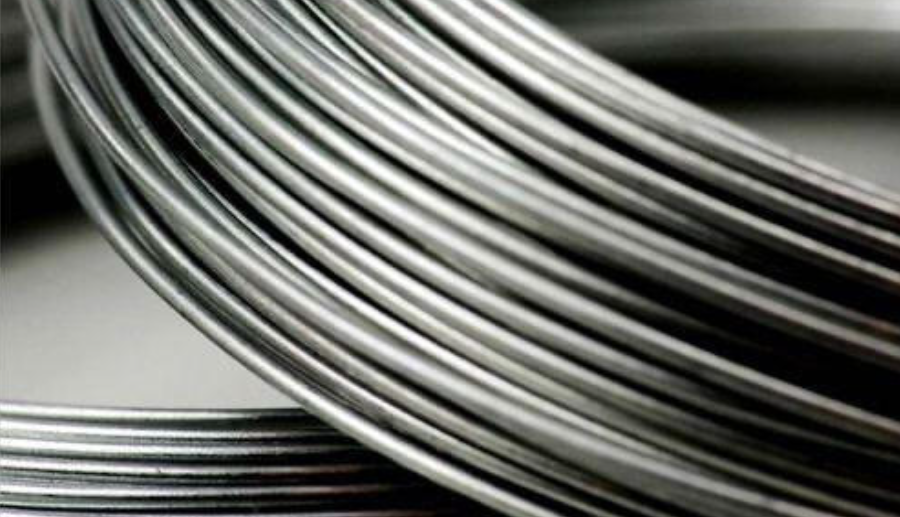
Grain Structure Optimization in 8mm Cold Drawn Wire
- Axial Grain Alignment: 8mm cold drawn wirefrom Anping County Puersen undergoes controlled cold drawing that aligns steel grains along the wire’s axis, increasing tensile strength to 600–800 MPa—30% higher than hot-rolled alternatives. This alignment resists shear forces in beam-column joints, a critical factor in high-rise building stability.
- Microvoid Elimination: The cold-drawing process compresses internal microvoids in 8mm cold drawn wire, reducing crack propagation under cyclic loads. This makes it ideal for bridge expansion joints, where repeated vehicle-induced vibrations would degrade standard reinforcement over time.
- Uniform Hardness Distribution: Through precise die sequencing, the company ensures 8mm cold drawn wire maintains consistent hardness (250–300 HV) across its cross-section. This uniformity prevents localized deformation in precast concrete panels, ensuring dimensional stability in modular construction.
Fatigue Resistance in 4mm Cold Drawn Wire
- High-Cycle Fatigue Tolerance: 4mm cold drawn wire exhibits exceptional resistance to fatigue failure, withstanding over 10 million load cycles at 60% of its ultimate tensile strength. Anping County Puersen’s wire is used in suspension bridge cables, where wind-induced oscillations would cause premature failure in lesser materials.
- Stress Corrosion Cracking Resistance: The smooth surface finish of 4mm cold drawn wire (Ra <0.8μm) minimizes stress concentration points, reducing the risk of stress corrosion in humid environments. This property is vital for coastal structures, such as pier reinforcements exposed to salt spray.
- Post-Yield Ductility: Despite its high strength, 4mm cold drawn wire retains 15–20% elongation before fracture, allowing controlled deformation in earthquake-prone areas. This ductility prevents sudden failure in retrofitted historical buildings, where preservation of architectural integrity is paramount.
Dimensional Precision in 6mm Cold Drawn Wire
- Tight Diameter Tolerance: 6mm cold drawn wire from Anping County Puersen maintains a diameter tolerance of ±0.02mm, ensuring uniform concrete coverage in thin-shell structures like dome roofs. This precision prevents weak points caused by uneven wire spacing in complex geometries.
- Straightness Control: The company’s post-drawing annealing process ensures 6mm cold drawn wire has a straightness deviation of <1mm per meter, critical for pre-stressed concrete applications. This reduces camber in precast beams, simplifying on-site assembly.
- Surface Consistency: 6mm cold drawn wire features a uniform surface texture that enhances bonding with concrete, achieving a pull-out strength of 5–7 MPa. This bond is essential for tunnel linings, where wire-concrete separation could lead to structural compromise.
Application Versatility in 8mm Cold Drawn Wire
- Heritage Building Reinforcement: 8mm cold drawn wire is used to reinforce masonry in historical structures, where its low profile (8mm diameter) minimizes visual impact. Anping County Puersen’s wire, with its corrosion-resistant coating, preserves architectural aesthetics while adding structural stability.
- Geotechnical Engineering: In soil nailing applications, 8mm cold drawn wire anchors unstable slopes by distributing tensile forces evenly through the soil. Its high strength-to-weight ratio allows longer nails (up to 15m) without excessive bulk, reducing installation complexity.
- Industrial Flooring Systems: 8mm cold drawn wireforms the skeleton of heavy-duty industrial floors, where its fatigue resistance withstands repeated forklift traffic. The wire’s dimensional accuracy ensures consistent load distribution, preventing cracks in warehouse and factory floors.
8mm Cold Drawn Wire FAQS
How does 8mm cold drawn wire compare to rebar in structural reinforcement?
8mm cold drawn wire offers higher tensile strength (600–800 MPa vs. 400–500 MPa for rebar) and better fatigue resistance, making it suitable for applications with cyclic loads. Anping County Puersen’s wire is also more flexible, adapting to complex shapes in custom construction projects where rigid rebar is impractical.
What makes 4mm cold drawn wire ideal for pre-stressed concrete?
4mm cold drawn wire’s high strength and tight tolerance allow precise pre-stressing forces, ensuring uniform concrete compression. Its ductility prevents brittle failure, a critical safety feature in pre-stressed applications like parking garage slabs. Anping County Puersen’s wire meets ASTM A823 standards for pre-stressed concrete components.
Can 6mm cold drawn wire be used in marine environments?
Yes, 6mm cold drawn wire from Anping County Puersen, when coated with epoxy or galvanized, resists saltwater corrosion. Its smooth surface reduces marine growth adhesion, maintaining performance in seawalls, piers, and offshore platforms for 20+ years.
How does cold drawing enhance the performance of 8mm cold drawn wire?
Cold drawing refines the grain structure of 8mm cold drawn wire, increasing strength and hardness while reducing ductility loss. This process also improves surface finish and dimensional accuracy, ensuring consistent performance in structural applications. Anping County Puersen’s multi-stage drawing process optimizes these benefits.
What is the maximum length of 8mm cold drawn wire available for structural projects?
Anping County Puersen offers 8mm cold drawn wire in coils up to 500m, minimizing splices in large-scale projects. Longer lengths reduce installation time and potential weak points, enhancing structural integrity in applications like bridge decks and high-rise building frames.
-
Wholesale 358 Security Fence Prison Mesh – Durable Perimeter Security Solutions | Building Wire Mesh
NewsDec.09,2025
-
Wholesale Black Annealed Wire Specification & Vendor Comparison
NewsDec.09,2025
-
Wholesale Soft Electro Galvanized Iron Wire | Trusted Industrial Supply
NewsDec.09,2025
-
Wholesale Reinforcing Mesh For Concrete Building – Durable, Cost-Effective Solutions
NewsDec.09,2025
-
Durable Wholesale PVC Coated 2x1x1 Gabion Boxes for Industrial Use
NewsDec.08,2025
-
Wholesale Galvanised Heavy-Gauge Welded Wire Mesh – Durable Industrial Mesh
NewsDec.08,2025
 Afrikaans
 Albanian
 Amharic
 Arabic
 Armenian
 Azerbaijani
 Basque
 Belarusian
 Bengali
 Bosnian
 Bulgarian
 Catalan
 Cebuano
 Corsican
 Croatian
 Czech
Czech
 Danish
 Dutch
Dutch
 Esperanto
 Estonian
 Finnish
 French
 Frisian
 Galician
 Georgian
 German
 Greek
Greek
 Gujarati
 Haitian Creole
 Hausa
Hausa
 Hawaiian
 Hebrew
 Hindi
Hindi
 Miao
Miao
 Hungarian
 Icelandic
 Igbo
Igbo
 Indonesian
 Irish
Irish
 Italian
 Japanese
 Javanese
 Kannada
 Kazakh
 Khmer
Khmer
 Rwandese
 Korean
 Kurdish
 Kyrgyz
 Lao
Lao
 Latin
Latin
 Latvian
 Lithuanian
 Luxembourgish
 Macedonian
 Malgashi
 Malay
Malay
 Malayalam
 Maltese
 Maori
Maori
 Marathi
 Mongolian
 Myanmar
 Nepali
 Norwegian
 Norwegian
 Occitan
 Pashto
 Persian
 Polish
 Portuguese
 Punjabi
 Romanian
 Russian
 Samoan
 Scottish Gaelic
 Serbian
 Sesotho
 Shona
Shona
 Sindhi
 Sinhala
 Slovak
 Slovenian
 Somali
 Spanish
 Sundanese
 Swahili
 Swedish
 Tagalog
 Tajik
Tajik
 Tamil
Tamil
 Tatar
Tatar
 Telugu
 Thai
Thai
 Turkish
 Turkmen
 Ukrainian
 Urdu
Urdu
 Uighur
 Uzbek
Uzbek
 Vietnamese
 Welsh
Welsh
 Bantu
Bantu
 Yiddish
 Yoruba
 Zulu
Zulu
 English