

Sep . 01, 2025 16:42 فهرست ڏانھن واپس
Welded Wire Mesh for Modern Construction
In the world of construction, welded تار mesh 100x100mm has emerged as a cornerstone of durability, efficiency, and flexibility. Engineered with precision and uniformity, this mesh design serves as a robust framework for reinforced concrete, providing excellent tensile strength while minimizing labor and material waste. Whether you're building residential foundations, highways, tunnels, or industrial floors, welded تار mesh 100x100mm ensures long-lasting support under heavy loads and extreme environmental conditions.
The 100x100mm grid pattern allows for even stress distribution, reducing the risk of cracking in concrete slabs. It ensures structural integrity, making it ideal for use in large slabs where resistance to thermal and shrinkage cracking is vital. Furthermore, the standardized square opening of welded تار mesh 100x100mm allows for optimal bonding with concrete, enhancing its load-carrying capacity.
Manufactured using low-carbon steel wire or stainless steel, this type of mesh is fused through electrical welding at each intersection, creating a reliable and dimensionally stable product. The result is a mesh that does not unravel or deform, even under pressure. The precise grid layout of welded تار mesh 100x100mm makes it particularly suitable for modern concrete design, prefabricated components, and onsite reinforcement.
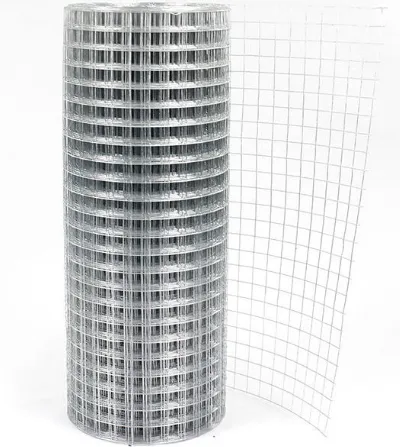
How Weld Wire Mesh Delivers Superior Efficiency in Industrial and Civil Engineering Projects
The use of ويلڊ تار Mesh in civil and industrial applications has revolutionized the speed, cost, and efficiency of construction. Produced in flat panels or rolls, ويلڊ تار Mesh is fabricated from longitudinal and transverse wires welded together at intersections to form a rigid matrix. This allows for faster installation compared to manually tied rebar grids, saving significant time and labor costs on construction sites.
Contractors and engineers often favor ويلڊ تار Mesh for its versatility. It is widely applied in concrete road paving, precast concrete panels, bridge decks, and even retaining walls. Its inherent structural integrity and easy handling make it particularly valuable in projects with complex or repetitive reinforcement layouts. With consistent spacing and thickness, ويلڊ تار Mesh ensures accuracy and quality across construction stages.
Additionally, ويلڊ تار Mesh enhances site safety and cleanliness. Unlike rebar which can pose tripping hazards or sharp ends, the smooth edges and firm matrix of the mesh reduce onsite injuries. The mesh’s predictability and load-bearing reliability also allow for more accurate project calculations and budgeting. With fewer reinforcement errors, engineers can reduce inspection time and focus on overall project performance.
Sustainability is another key feature. ويلڊ تار Mesh produces less material waste during manufacturing and installation, contributing to greener building practices. It also allows for easier recycling and reuse, supporting environmentally conscious construction strategies.
Understanding Welded Wire Mesh Sizes for Concrete Applications
Choosing the correct welded wire mesh sizes for concrete is critical to achieving desired structural performance. Different mesh sizes provide varying degrees of strength and coverage, tailored to specific construction needs. For example, welded تار mesh 100x100mm is optimal for reinforcing floor slabs, pavements, and vertical structures due to its balance between flexibility and strength.
Typical welded wire mesh sizes for concrete range from 50x50mm up to 200x200mm. Smaller openings offer more coverage and reinforcement points, ideal for applications with finer aggregates or where high tensile support is required. Larger grid sizes, while providing less frequent reinforcement, are suited for low-stress slabs and applications where material economy is a priority.
The wire gauge or thickness also plays a crucial role in mesh selection. Heavier gauge wires (e.g., 4-6mm) provide higher tensile strength and are better for heavy-duty slabs or high-load industrial zones. Lighter gauges (2-3mm) are more appropriate for residential driveways, walkways, and precast fence panels.
Customization is readily available. Many manufacturers offer tailor-made welded wire mesh sizes for concrete, based on blueprint specifications or special project requirements. This customization not only improves reinforcement efficiency but also reduces the need for onsite cutting or overlapping, minimizing waste and labor.
Roll Welded Wire Mesh: Streamlining Large-Scale Reinforcement Projects
When it comes to scaling construction efficiency, roll welded wire mesh offers unmatched advantages in terms of transport, handling, and installation. Delivered in compact rolls, this mesh form is easy to unroll and position over wide surface areas, making it ideal for roadwork, factory floors, runways, and irrigation canals.
Roll welded wire mesh is especially useful in slab-on-grade foundations, where long, uninterrupted runs of reinforcement are necessary. With reduced need for joints and overlaps, the mesh ensures better load transfer across larger areas, contributing to slab uniformity and crack resistance.
One of the key benefits of roll welded wire mesh is speed. Contractors can cover large surfaces in a fraction of the time it would take to lay down rebar or flat mesh panels. This accelerated workflow not only boosts productivity but also shortens project timelines — a major advantage in competitive construction markets.
From a logistical perspective, roll welded wire mesh is easier to transport and store. Rolls occupy less space than flat panels and can be stacked more efficiently on trucks or at storage sites. Additionally, they are safer to move and pose less risk of injury due to fewer sharp edges and manageable weights.
The adaptability of roll welded wire mesh also shines in remote or hard-to-access construction zones. Transporting rolls over rough terrain or through narrow access points is simpler and more efficient, ensuring reinforcement can be installed quickly, even in challenging environments.
FAQs About Welded Wire Mesh
What is the primary advantage of using welded wire mesh 100x100mm in concrete reinforcement?
Welded wire mesh 100x100mm offers uniform spacing and strong bonding with concrete, which leads to superior crack control and load distribution. Its consistent geometry ensures even stress transfer across the concrete slab, reducing structural weaknesses. It also simplifies installation compared to manually tying rebar.
How does Weld Wire Mesh differ from traditional rebar?
ويلڊ تار Mesh is prefabricated and welded at each intersection, providing rigidity and dimensional accuracy. Rebar, on the other hand, must be manually cut, bent, and tied, which increases labor time and risk of inconsistency. Mesh is more efficient for projects with repetitive reinforcement patterns and is easier to install with less labor.
Which welded wire mesh sizes for concrete should I use for residential flooring?
For residential flooring, the most commonly recommended welded wire mesh sizes for concrete are 100x100mm or 150x150mm, depending on the load expectations and slab thickness. A 100x100mm mesh made with 4mm wire typically provides sufficient reinforcement for standard home slabs and driveways.
What are the shipping and handling considerations for roll welded wire mesh?
Roll welded wire mesh is compact and efficient to transport, taking up less space than flat panels. It’s usually delivered in coils that can be unrolled onsite. Handling should be done with care to avoid deformation, and protective gloves are advised during unrolling. Its portability makes it ideal for both urban and remote projects.
Can welded wire mesh be customized to specific project dimensions or material needs?
Yes, most manufacturers provide customization for welded تار mesh 100x100mm, as well as other welded wire mesh sizes for concrete. Customizations include wire diameter, grid spacing, roll width, and material type (e.g., galvanized or stainless steel). These options help match structural requirements precisely while reducing onsite adjustments.
-
Wholesale 358 Security Fence Prison Mesh – Durable Perimeter Security Solutions | Building Wire Mesh
خبرونDec.09,2025
-
Wholesale Black Annealed Wire Specification & Vendor Comparison
خبرونDec.09,2025
-
Wholesale Soft Electro Galvanized Iron Wire | Trusted Industrial Supply
خبرونDec.09,2025
-
Wholesale Reinforcing Mesh For Concrete Building – Durable, Cost-Effective Solutions
خبرونDec.09,2025
-
Durable Wholesale PVC Coated 2x1x1 Gabion Boxes for Industrial Use
خبرونDec.08,2025
-
Wholesale Galvanised Heavy-Gauge Welded Wire Mesh – Durable Industrial Mesh
خبرونDec.08,2025
 English
 Afrikaans
 Albanian
 Amharic
 Arabic
 Armenian
 Azerbaijani
 Basque
 Belarusian
 Bengali
 Bosnian
 Bulgarian
 Catalan
 Cebuano
 Corsican
 Croatian
 Czech
Czech
 Danish
 Dutch
Dutch
 Esperanto
 Estonian
 Finnish
 French
 Frisian
 Galician
 Georgian
 German
 Greek
Greek
 Gujarati
 Haitian Creole
 Hausa
Hausa
 Hawaiian
 Hebrew
 Hindi
Hindi
 Miao
Miao
 Hungarian
 Icelandic
 Igbo
Igbo
 Indonesian
 Irish
Irish
 Italian
 Japanese
 Javanese
 Kannada
 Kazakh
 Khmer
Khmer
 Rwandese
 Korean
 Kurdish
 Kyrgyz
 Lao
Lao
 Latin
Latin
 Latvian
 Lithuanian
 Luxembourgish
 Macedonian
 Malgashi
 Malay
Malay
 Malayalam
 Maltese
 Maori
Maori
 Marathi
 Mongolian
 Myanmar
 Nepali
 Norwegian
 Norwegian
 Occitan
 Pashto
 Persian
 Polish
 Portuguese
 Punjabi
 Romanian
 Russian
 Samoan
 Scottish Gaelic
 Serbian
 Sesotho
 Shona
Shona
 Sinhala
 Slovak
 Slovenian
 Somali
 Spanish
 Sundanese
 Swahili
 Swedish
 Tagalog
 Tajik
Tajik
 Tamil
Tamil
 Tatar
Tatar
 Telugu
 Thai
Thai
 Turkish
 Turkmen
 Ukrainian
 Urdu
Urdu
 Uighur
 Uzbek
Uzbek
 Vietnamese
 Welsh
Welsh
 Bantu
Bantu
 Yiddish
 Yoruba
 Zulu
Zulu
 Sindhi