
Aug . 28, 2025 16:15 Lura għal-lista
Reinforcing Mesh in 3D-Printed Concrete Structures
The advent of 3D-printed concrete has revolutionized the construction industry, offering unparalleled design freedom, reduced material waste, and faster project timelines. However, the structural integrity of these innovative creations relies heavily on one critical component: reinforcing mesh. This article explores how reinforcing mesh, rinforz tal-malji tal-azzar, u malji li jsaħħu s-sigurtà are transforming 3D-printed concrete structures, ensuring they are as durable as they are groundbreaking.
The Role of Malji ta' rinfurzar in 3D-Printed Concrete Structures
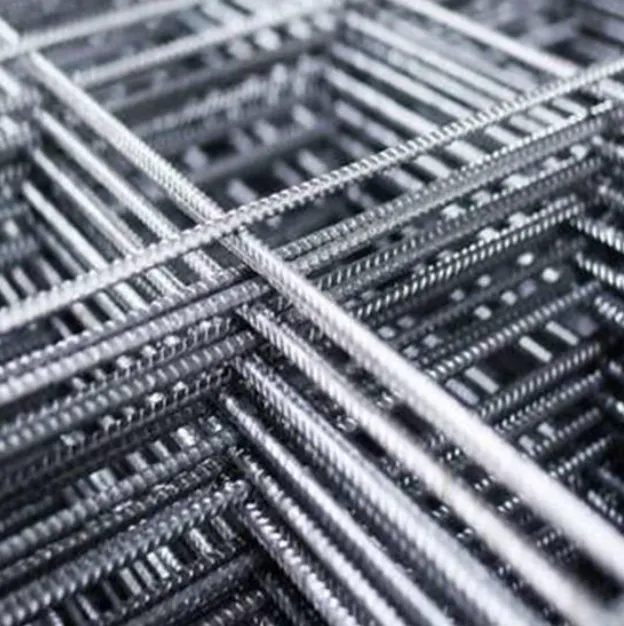
Reinforcing mesh serves as the skeletal framework within 3D-printed concrete, providing tensile strength to counteract concrete’s inherent brittleness. Unlike traditional rebar grids, reinforcing mesh is lightweight, customizable, and seamlessly integrated during the printing process. This adaptability makes it ideal for complex geometries, such as arched façades or lattice-style foundations, where conventional reinforcement methods fall short.
In 3D printing, layers of concrete are extruded precisely, and reinforcing mesh can be embedded between these layers or within the concrete mixture itself. This integration ensures uniform load distribution, reducing the risk of cracks under stress. Additionally, reinforcing mesh enhances resistance to environmental factors like temperature fluctuations and seismic activity, making structures safer and longer-lasting.
The use of reinforcing mesh also aligns with sustainable construction practices. By minimizing material overlap and optimizing structural efficiency, it reduces the carbon footprint of projects—a key consideration in modern architecture.
Reinforcing Steel Mesh: Strength and Flexibility for Modern Construction
When durability is non-negotiable, rinforz tal-malji tal-azzar emerges as the gold standard. Composed of interlinked steel wires, this mesh type combines high tensile strength with flexibility, making it indispensable for heavy-load applications like bridges, high-rises, and industrial facilities.
In 3D-printed concrete, rinforz tal-malji tal-azzar is often pre-fabricated into modular panels that align with digital blueprints. These panels are embedded into the concrete during printing, creating a hybrid structure that marries the speed of 3D printing with the robustness of steel. The result? Buildings capable of withstanding extreme weights, dynamic forces, and decades of wear.
Corrosion resistance is another standout feature. Advanced coatings, such as epoxy or galvanized layers, protect rinforz tal-malji tal-azzar from moisture and chemical exposure, ensuring longevity even in harsh environments. This makes it a cost-effective solution over a structure’s lifecycle, as maintenance needs are significantly reduced.
Security Reinforcing Mesh: Enhancing Durability and Safety
For projects demanding heightened safety, malji li jsaħħu s-sigurtà offers an innovative solution. This specialized mesh integrates materials like carbon fiber or high-grade polymers with traditional steel, creating a barrier that deters vandalism, forced entry, and explosive impacts.
In 3D-printed concrete, malji li jsaħħu s-sigurtà is strategically placed in vulnerable areas, such as perimeter walls or critical infrastructure components. Its dense, interlocking design disperses energy from impacts, preventing localized damage from compromising the entire structure. This is particularly valuable for public spaces, government buildings, or disaster-prone regions.
Beyond physical security, malji li jsaħħu s-sigurtà enhances fire resistance. Certain variants are coated with fire-retardant materials that withstand extreme temperatures, buying precious time during emergencies. Combined with 3D printing’s precision, this mesh ensures safety without sacrificing aesthetic or functional design.
FAQs About Malji ta' rinfurzar in 3D-Printed Concrete
What Are the Advantages of Using Malji ta' rinfurzar in 3D-Printed Concrete?
Reinforcing mesh significantly boosts tensile strength, reduces cracking, and enables complex designs. Its lightweight nature cuts transportation costs, while its integration during printing speeds up construction timelines.
How Does Reinforcing Steel Mesh Compare to Traditional Rebar?
Reinforcing steel mesh offers superior flexibility and ease of installation. Unlike rigid rebar, it adapts to intricate shapes, reduces labor costs, and provides consistent coverage, enhancing structural reliability.
Is Security Reinforcing Mesh Suitable for Residential Projects?
Absolutely. While ideal for high-security zones, malji li jsaħħu s-sigurtà also benefits homes in disaster-prone areas. Its impact-resistant properties protect against storms, earthquakes, and intrusions, ensuring peace of mind.
Can Malji ta' rinfurzar Be Customized for Unique Designs?
Yes. Digital modeling allows reinforcing mesh to be tailored to any shape or size. This customization ensures optimal performance without compromising architectural creativity.
How Does Malji ta' rinfurzar Improve Sustainability?
By minimizing material waste and enhancing structural efficiency, reinforcing mesh reduces the carbon footprint of 3D-printed projects. Its durability also means fewer repairs and replacements over time.
The integration of reinforcing mesh, rinforz tal-malji tal-azzar, u malji li jsaħħu s-sigurtà in 3D-printed concrete marks a leap forward in construction technology. These solutions not only address structural challenges but also pave the way for safer, smarter, and more sustainable buildings. As the industry evolves, embracing these innovations will be key to unlocking the full potential of 3D-printed architecture.
-
Wholesale 358 Security Fence Prison Mesh – Durable Perimeter Security Solutions | Building Wire Mesh
AħbarijietDec.09,2025
-
Wholesale Black Annealed Wire Specification & Vendor Comparison
AħbarijietDec.09,2025
-
Wholesale Soft Electro Galvanized Iron Wire | Trusted Industrial Supply
AħbarijietDec.09,2025
-
Wholesale Reinforcing Mesh For Concrete Building – Durable, Cost-Effective Solutions
AħbarijietDec.09,2025
-
Durable Wholesale PVC Coated 2x1x1 Gabion Boxes for Industrial Use
AħbarijietDec.08,2025
-
Wholesale Galvanised Heavy-Gauge Welded Wire Mesh – Durable Industrial Mesh
AħbarijietDec.08,2025
 English
 Afrikaans
 Albanian
 Amharic
 Arabic
 Armenian
 Azerbaijani
 Basque
 Belarusian
 Bengali
 Bosnian
 Bulgarian
 Catalan
 Cebuano
 Corsican
 Croatian
 Czech
Czech
 Danish
 Dutch
Dutch
 Esperanto
 Estonian
 Finnish
 French
 Frisian
 Galician
 Georgian
 German
 Greek
Greek
 Gujarati
 Haitian Creole
 Hausa
Hausa
 Hawaiian
 Hebrew
 Hindi
Hindi
 Miao
Miao
 Hungarian
 Icelandic
 Igbo
Igbo
 Indonesian
 Irish
Irish
 Italian
 Japanese
 Javanese
 Kannada
 Kazakh
 Khmer
Khmer
 Rwandese
 Korean
 Kurdish
 Kyrgyz
 Lao
Lao
 Latin
Latin
 Latvian
 Lithuanian
 Luxembourgish
 Macedonian
 Malgashi
 Malay
Malay
 Malayalam
 Maori
Maori
 Marathi
 Mongolian
 Myanmar
 Nepali
 Norwegian
 Norwegian
 Occitan
 Pashto
 Persian
 Polish
 Portuguese
 Punjabi
 Romanian
 Russian
 Samoan
 Scottish Gaelic
 Serbian
 Sesotho
 Shona
Shona
 Sindhi
 Sinhala
 Slovak
 Slovenian
 Somali
 Spanish
 Sundanese
 Swahili
 Swedish
 Tagalog
 Tajik
Tajik
 Tamil
Tamil
 Tatar
Tatar
 Telugu
 Thai
Thai
 Turkish
 Turkmen
 Ukrainian
 Urdu
Urdu
 Uighur
 Uzbek
Uzbek
 Vietnamese
 Welsh
Welsh
 Bantu
Bantu
 Yiddish
 Yoruba
 Zulu
Zulu
 Maltese