

Ira . 01, 2025 15:48 Itzuli zerrendara
Built to Withstand Structural Demands
In high-performance construction environments where both strength and reliability are crucial, alanbre-sare sendotzeko a193 is a preferred solution. This specialized mesh is engineered with high-tensile steel wire and conforms to demanding industry standards, making it ideal for heavy-duty concrete reinforcement in bridges, tunnels, high-rise buildings, and large-span slabs.
Reinforcing wire mesh a193 offers precise control over concrete cracking by distributing loads evenly across the structure. The A193 specification ensures robust resistance to both static and dynamic stress, outperforming standard meshes in terms of strength, ductility, and weld integrity. It is especially valuable in applications requiring superior corrosion resistance and structural endurance.
Due to its mechanical properties and standardized fabrication, alanbre-sare sendotzeko a193 simplifies quality control in large projects. Engineers and project managers appreciate its consistency, while installers benefit from easier handling and predictable installation patterns. From precast panels to monolithic pours, this mesh optimizes construction timelines without sacrificing structural performance.
What sets alanbre-sare sendotzeko a193 apart is its reliability in high-load scenarios. Whether integrated into road decks, airport runways, or earthquake-resistant infrastructure, it plays a pivotal role in reinforcing and extending the service life of concrete structures under constant mechanical and environmental stress.
Reinforcing Mesh: The Foundation of Modern Concrete Construction
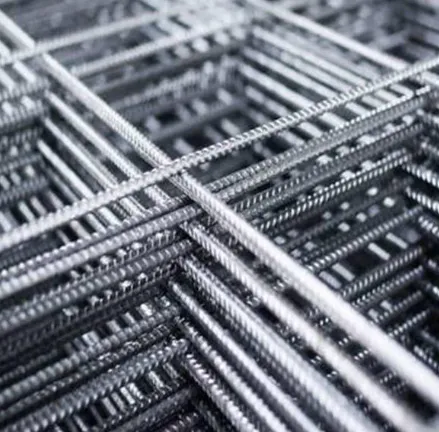
At the heart of reinforced concrete systems lies the dependable reinforcing mesh, a time-tested solution for increasing tensile capacity and preventing shrinkage cracks. Made by welding intersecting steel wires into rectangular or square grids, reinforcing mesh serves as a critical support matrix embedded within concrete slabs, beams, columns, and panels.
Modern construction projects demand not only strength but speed and precision — and reinforcing mesh delivers on all fronts. Available in a variety of mesh sizes, wire diameters, and material finishes (such as galvanized or epoxy-coated), it is suitable for projects ranging from residential flooring and retaining walls to commercial parking structures and tunnel linings.
What makes reinforcing mesh indispensable is its adaptability. It can be cut, bent, or overlapped to suit diverse applications, helping builders maintain uniformity across complex blueprints. Additionally, it reduces the need for manual tying — a common source of labor costs and human error — thereby streamlining on-site reinforcement.
The popularity of reinforcing mesh continues to grow due to its economic and performance advantages. It minimizes waste, enhances safety, and supports sustainable construction goals through recyclability. In a fast-paced construction industry, mesh reinforcement is no longer a luxury — it’s a necessity.
Reinforce Steel Mesh: Proven Strength in Harsh Environments
When durability meets design, reinforce steel mesh becomes the go-to solution for long-term structural reinforcement. It is fabricated from high-grade steel wires that are uniformly welded at right angles, providing exceptional tensile reinforcement to combat the natural weaknesses of concrete in tension.
Reinforce steel mesh is extensively used in areas where concrete is exposed to environmental stressors such as freeze-thaw cycles, saline water, or industrial chemicals. From marine structures and sewer infrastructure to cold storage facilities and industrial basements, the mesh enhances the resilience and service life of concrete elements.
Another strength of reinforce steel mesh is its dimensional accuracy. Unlike loose rebar systems that may shift during concrete pouring, welded mesh remains in place, ensuring effective coverage throughout the pour. Its grid alignment ensures optimal bonding with the concrete, allowing for uniform stress distribution and reduced cracking.
Architects and engineers favor reinforce steel mesh for both flatwork and vertical reinforcement because of its efficiency, ease of handling, and superior load-bearing properties. Its pre-engineered format reduces installation time by up to 50% compared to manual steel tying, translating to faster project completion and lower labor costs.
Reinforcing Mesh A393: A Trusted Standard in Heavy Construction
As one of the most widely used specifications in reinforced concrete work, sarea sendotzeko a393 provides robust structural support for heavily loaded slabs and foundation elements. Known for its 10mm wire diameter and 200x200mm spacing, A393 is ideal for large-scale civil engineering applications, including roadways, industrial yards, raft foundations, and suspended slabs.
The use of sarea sendotzeko a393 ensures reliable performance under high-load conditions. Its thicker wires and rigid configuration make it an excellent choice for preventing shear and flexural failure in reinforced concrete members. When properly placed, it ensures excellent crack control even in expansive concrete pours.
Manufactured to strict British Standard BS4483 or equivalent codes, sarea sendotzeko a393 guarantees consistency and compatibility with other structural components. Whether used in precast manufacturing or cast-in-situ concrete, its durability and versatility make it a cost-effective reinforcement option.
Contractors often choose sarea sendotzeko a393 not only for its strength but for its logistics efficiency. Supplied in pre-sized sheets or custom-cut panels, it reduces preparation time on-site and integrates seamlessly with other reinforcement methods. It also complies with green building codes and can be reused in certain temporary installations, further boosting its economic value.
FAQs About Reinforcing Wire Mesh
What makes reinforcing wire mesh a193 suitable for high-load concrete applications?
Reinforcing wire mesh a193 is made from high-strength steel wire, welded to form a consistent grid that resists tensile and compressive forces. The A193 standard guarantees excellent performance under mechanical stress and corrosion, making it perfect for bridges, industrial flooring, and infrastructure requiring long service life and structural stability.
What are the main benefits of using reinforcing mesh in residential and commercial projects?
Reinforcing mesh improves the tensile strength of concrete, preventing shrinkage cracks and structural failure. It also reduces labor due to faster installation and improves uniformity in concrete pouring. Its adaptability across different applications—from driveways to columns—makes it an efficient and reliable reinforcement option.
Is reinforce steel mesh better than traditional rebar for large construction jobs?
Yes, reinforce steel mesh offers several advantages over traditional rebar in certain scenarios. It comes in pre-welded panels that reduce manual labor and installation time. Its uniform grid allows for accurate placement, improving concrete integrity and reducing onsite errors. It's particularly effective for slabs and wide-spanning areas.
Where is reinforcing mesh a393 most commonly used?
Reinforcing mesh a393 is often used in civil and heavy construction, such as highways, industrial parks, warehouses, and foundations. Its thicker wire diameter and strong grid structure make it ideal for areas that bear heavy dynamic or static loads, offering long-term performance and crack control.
Can I customize reinforcing wire mesh specifications for my project?
Yes. Most manufacturers offer custom sizes for alanbre-sare sendotzeko a193, reinforcing mesh, or reinforce steel mesh, including different wire diameters, grid spacing, sheet lengths, and finishes (e.g., galvanized, epoxy-coated). Customization ensures compatibility with project specifications and can reduce waste and labor costs.
-
Wholesale 358 Security Fence Prison Mesh – Durable Perimeter Security Solutions | Building Wire Mesh
BerriakDec.09,2025
-
Wholesale Black Annealed Wire Specification & Vendor Comparison
BerriakDec.09,2025
-
Wholesale Soft Electro Galvanized Iron Wire | Trusted Industrial Supply
BerriakDec.09,2025
-
Wholesale Reinforcing Mesh For Concrete Building – Durable, Cost-Effective Solutions
BerriakDec.09,2025
-
Durable Wholesale PVC Coated 2x1x1 Gabion Boxes for Industrial Use
BerriakDec.08,2025
-
Wholesale Galvanised Heavy-Gauge Welded Wire Mesh – Durable Industrial Mesh
BerriakDec.08,2025
 English
 Afrikaans
 Albanian
 Amharic
 Arabic
 Armenian
 Azerbaijani
 Belarusian
 Bengali
 Bosnian
 Bulgarian
 Catalan
 Cebuano
 Corsican
 Croatian
 Czech
Czech
 Danish
 Dutch
Dutch
 Esperanto
 Estonian
 Finnish
 French
 Frisian
 Galician
 Georgian
 German
 Greek
Greek
 Gujarati
 Haitian Creole
 Hausa
Hausa
 Hawaiian
 Hebrew
 Hindi
Hindi
 Miao
Miao
 Hungarian
 Icelandic
 Igbo
Igbo
 Indonesian
 Irish
Irish
 Italian
 Japanese
 Javanese
 Kannada
 Kazakh
 Khmer
Khmer
 Rwandese
 Korean
 Kurdish
 Kyrgyz
 Lao
Lao
 Latin
Latin
 Latvian
 Lithuanian
 Luxembourgish
 Macedonian
 Malgashi
 Malay
Malay
 Malayalam
 Maltese
 Maori
Maori
 Marathi
 Mongolian
 Myanmar
 Nepali
 Norwegian
 Norwegian
 Occitan
 Pashto
 Persian
 Polish
 Portuguese
 Punjabi
 Romanian
 Russian
 Samoan
 Scottish Gaelic
 Serbian
 Sesotho
 Shona
Shona
 Sindhi
 Sinhala
 Slovak
 Slovenian
 Somali
 Spanish
 Sundanese
 Swahili
 Swedish
 Tagalog
 Tajik
Tajik
 Tamil
Tamil
 Tatar
Tatar
 Telugu
 Thai
Thai
 Turkish
 Turkmen
 Ukrainian
 Urdu
Urdu
 Uighur
 Uzbek
Uzbek
 Vietnamese
 Welsh
Welsh
 Bantu
Bantu
 Yiddish
 Yoruba
 Zulu
Zulu
 Basque